Narrative Slack: From Claims to Consequences
How the Gap Between Company Claims and Actions Shapes Customer and Investor Decisions
-
October 13, 2026
-

Introduction
Earlier this year, we set out how the gap between what companies say and what they do, narrative slack, has narrowed significantly.
That gap once allowed organisations to build credibility ahead of delivery. That space is now limited. Claims are tested quickly, aided by AI and social media. When they do not hold up, the impact is not contained to perception. It changes behaviour.
Across the UK, most consumers reassess a company’s credibility when words and actions no longer align. For many, this leads directly to decisions to stop buying, or switching.
Investors respond to the same issue in a different way. Gaps between claims and delivery are taken as a reflection of whether a business can deliver. This affects confidence, increases scrutiny and, over time, changes how capital is allocated.
When Words and Actions Don’t Match, Customers Walk
When words and actions do not align, the response from consumers is immediate. For most consumers, it changes how they see the company and what they do next. For many, that reassessment of a company quickly turns into behaviour.
- 71% say they are less likely to buy from the company in future
- 67% say they would stop buying
- 65% say they would switch to a competitor
- 66% of consumers say they change how they feel about a company when actions don’t match what it says publicly
What begins as a credibility issue can escalate beyond the company itself. Gaps between words and actions now show up in behaviour, from switching and lost customers to potential regulatory pressure.
- 34% say they would support campaigns or criticism against the company
- 28% say they would report it to a regulator or watchdog
In Some Sectors, Companies Are Less Likely To Be Believed
Scepticism is not evenly spread. In some sectors, consumers are more likely to assume that what companies say won’t reflect what they do. Consumers are most likely to expect gaps for energy and social media companies, followed by financial services and healthcare. In these sectors, companies are not given the benefit of the doubt. Claims are assumed to need proof.
These are sectors where companies are highly visible and where public claims are regularly tested in real time in the media, on social platforms and through direct customer experience.
Where expectations are high and past performance has been questioned, claims are less likely to be taken at face value. They are tested more quickly, and with less benefit of the doubt.
The implication is clear. Not only has narrative slack narrowed, where it is detected it affects who buys, who stays and who invests.
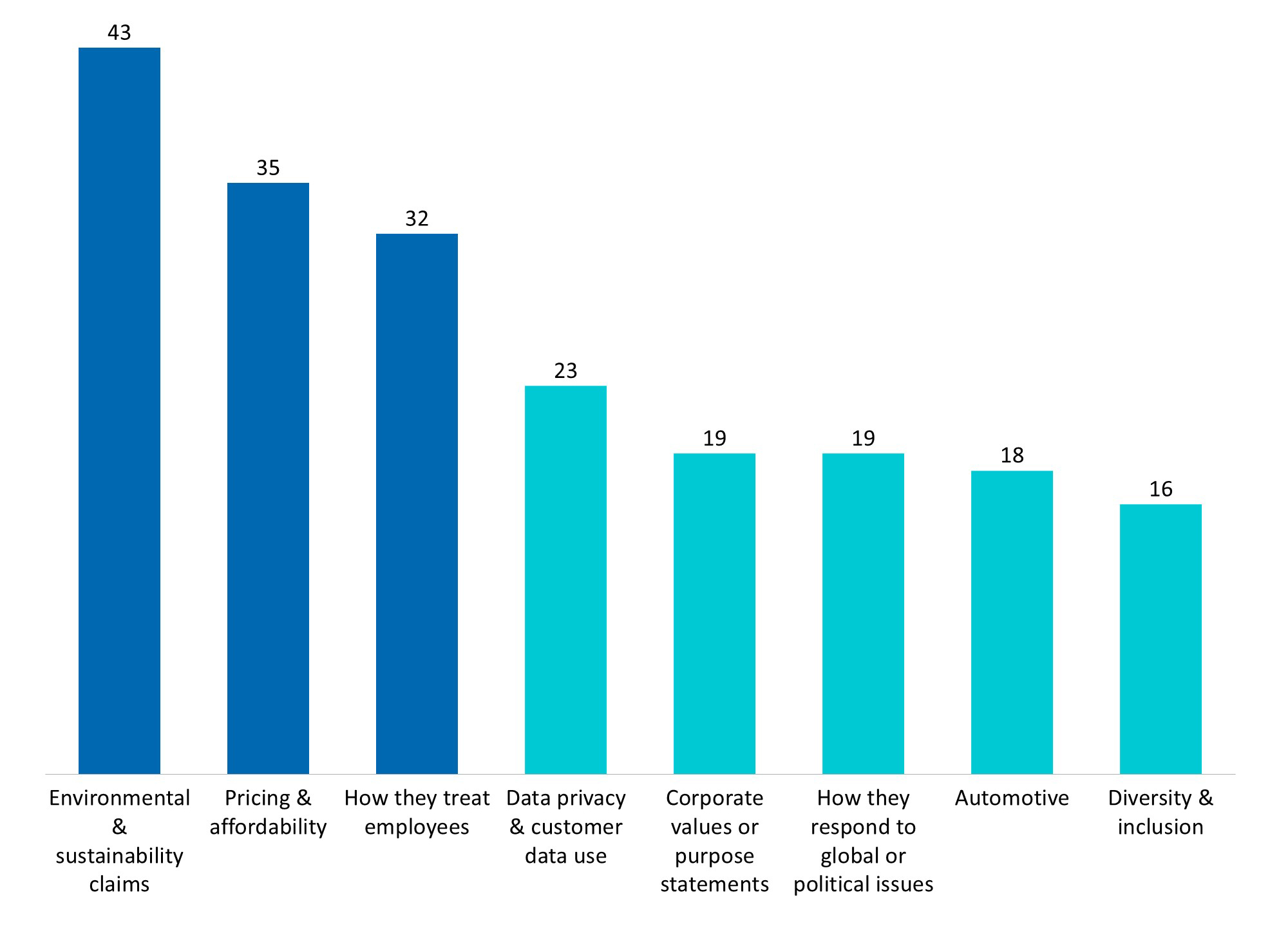
The same pattern appears in the issues consumers focus on, with claims on ESG, pricing and treatment of employees being met with the greatest levels of cynicism.
These topics sit at the centre of how companies position themselves and how they are judged. They are also areas where consumers have direct experience, strong opinions or a clear sense of what good looks like. That makes gaps easier to spot and harder to defend.
In practice, that changes the starting point. Some companies are building trust. Others are already having to prove it. Where belief is lower, claims are testedearlier and failure is judged more harshly.
Figure 1 - Industries in Which Consumers Feel Companies Are Most Likely To Say One Thing Publicly and Do Another in Reality
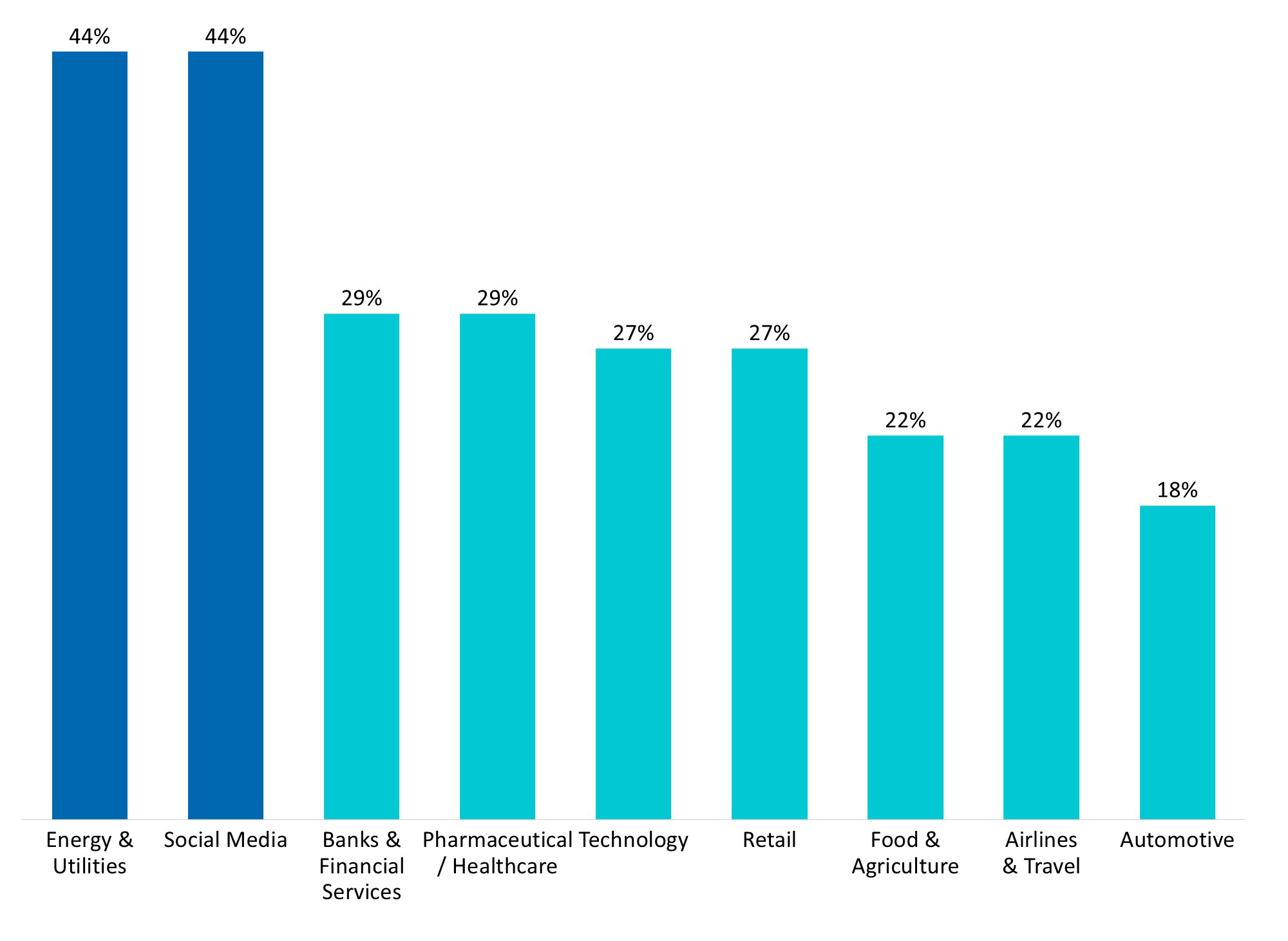
Figure 2 - Areas Consumers Feel Companies Are Most Likely To Say One Thing Publicly and Do Another in Reality
When Words and Actions Don’t Match, Investors Start To Pull Back
Investors are looking at the same gaps through a different lens. When claims run ahead of delivery, they raise a more fundamental question of whether the business can do what it says.
- 58% of investors say gaps between claims and delivery reduce confidence in management
More than a passive reaction, the gap changes how investors engage with the company. In practice, this means gaps between words and actions start to affect how investors engage, question and allocate capital. The challenge becomes one of whether the business can follow through. That is why the signals investors look for are consistent, as indicators of a company’s ability to deliver. What might once have been taken as ambition is now assessed as a test of performance. If that test is not met, confidence does not hold. For investors, gaps between words and actions quickly become a decision about whether to stay invested.
- 31% increase scrutiny of future disclosures and results
- 29% reduce or avoid increasing their position
- 50% want clear evidence of measurable progress
- 39% want alignment between what is said and what is done
- 35% want transparency about risks and limitations
When It Happens More Than Once, Investors Don’t Stay
A single gap between words and actions can be explained. Repeated gaps are harder to ignore. When claims run ahead of delivery more than once, investors no longer treat it as a one-off. It becomes a pattern. That pattern changes how they position themselves.
- 74% of investors say they would be likely to reduce their investment exposure if claims repeatedly run ahead of delivery
At this point, the issue is no longer credibility alone. It affects support for the business. What was initially a question of confidence becomes a decision about where to allocate capital. Whether to stay invested, reduce exposure or look elsewhere.
Now the impact moves beyond perception and into capital. Repeated overstatement does more than just weaken trust. It changes behaviour over time, and at scale. When gaps persist, investor support is no longer a guarantee.
One Gap. Two Timelines
- 68% change their behaviour
- 66% change how they see the company
Consumers and investors are responding to the same issue. They just do it at different speeds. Consumers react quickly. When words and actions don’t match, they change how they see the company and what they do next.
- 58% lose confidence
- 74% reduce exposure over time
Investors take a longer view. They look at the same gaps and ask whether the business can follow through. One narrative slack gap. Two timelines.
Narrative slack has both short and long-term impacts. The immediate impact is on customers and the the longerterm impact is on capital. What starts as a credibility issue end ups being a commercial one. What begins with customers, now carries through to investors.
The same narrative slack gap is now influencing both revenue and investment at a speed faster than companies have ever seen before.
Methodology
This research is based on an online survey conducted by FTI Consulting, with the participation of 2,000 UK general public and 200 UK institutional investors. The fieldwork was conducted between 10th and 22nd April and general public respondent data was weighted by gender to ensure representativeness
The views expressed herein are those of the author(s) and not necessarily the views of FTI Consulting, Inc., its management, its subsidiaries, its affiliates, or its other professionals.
Related Insights
Published
October 13, 2026
 Key Contacts
Senior Managing Director, Head of UK Corporate Reputation
Managing Director