

Rx for Compliance: Turning Data into Your Program’s Greatest Asset
-
September 25, 2026
-

Today’s regulatory environment is complex, fast-moving and unforgiving. Compliance teams need to harness the power of their data to truly become business partners and enablers. Those relying on spreadsheets, outdated metrics, and siloed activities will struggle to meet escalating regulatory demands and enable their business to achieve safe and sustainable growth. Successful compliance programs aren’t just checking boxes – they’re using data analytics to spot risks earlier, respond faster, and drive business value.
The good news is that moving up the analytics maturity curve doesn’t have to happen all at once. It’s a journey that starts with organizing and understanding the data you already have and progressively builds toward something far more powerful. The most mature programs benefit from predictive insights that proactively inform where new risks are coming from. Every step forward on that curve makes your program smarter, more efficient, and more defensible in the eyes of regulators.
The organizations that embrace this shift achieve more than just reducing their exposure to enforcement actions – they’re transforming compliance into a strategic asset. Data analytics gives compliance leaders the ability to tell a compelling, evidence-based story to their boards, their leadership teams, and their regulators. That’s a fundamentally different kind of compliance program, and it’s within reach for any organization willing to ask the right questions and take the first step.
How Ready Is Your Compliance Program, Really?
The best compliance leaders don’t wait for an audit or an enforcement action to take stock of where their program stands – they ask themselves hard questions on a regular basis. The self-assessment questions below can help evaluate where your analytics capabilities are strong, where they’re falling short, and – most importantly – where your biggest opportunities for growth are hiding.
- Do you have a clear inventory of the compliance-relevant data sources available across your organization?
- Do you have the internal talent and technology infrastructure needed to support a data-driven compliance program, or are there gaps that may need to be addressed?
- Are your compliance monitoring activities primarily reactive – responding to issues after they occur – or are you leveraging analytics to monitor high-risk areas and surface risks before they escalate?
- Can you objectively measure the effectiveness of your compliance program, and are you regularly reporting its impact on business risk to senior leadership and your board?
- Do you have a defined data strategy and analytics roadmap for your compliance program, with clear priorities, milestones, and executive sponsorship to drive it forward?
- Are you benchmarking your analytics capabilities against industry peers and regulatory expectations, and do you have a plan to close any gaps you identify?
Healthcare Quarter in Review Read Now
Consider a practical example: a compliance team at a pharmaceutical or medical device company can use analytics to continuously monitor healthcare professional meal spend across their entire field sales force, which is nearly impossible to do manually at scale. Advanced analytics can account for differences in regional and business specialty norms, and identify outlier patterns or duplicative meals from sales representatives across different business units. That kind of cross-functional visibility is a game-changer.
Catching those patterns early enables compliance teams to intervene with targeted training or process corrections before a potential audit or enforcement action puts the organization in a difficult position. That visibility is achievable today with tools that many organizations already own. Building momentum through small, visible wins that demonstrate value to leadership is the key to earning the investment needed to go further. Mature your program one use case at a time, and before long, data analytics will not just support your compliance function – it will define it.
Building Your Roadmap: Moving Up the Analytics Maturity Curve
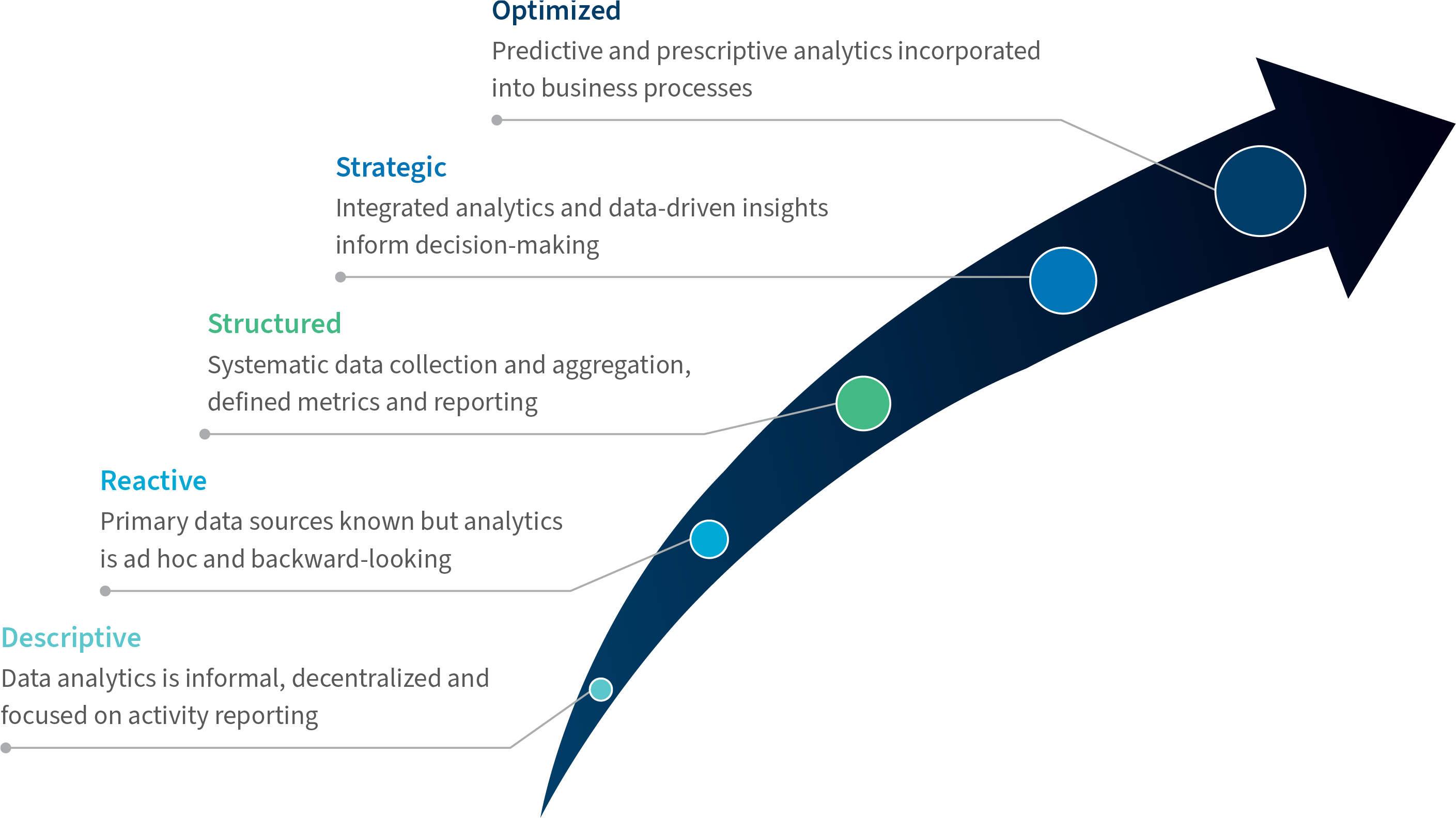
Every compliance analytics program starts somewhere, and the maturity curve gives you a practical framework for understanding exactly where you are and where you need to go. At the earliest stage, organizations are simply trying to collect and organize their data – pulling reports manually, reconciling spreadsheets, and reacting to problems after they’ve already surfaced. That’s a starting point, not a destination. As programs mature, they move from descriptive analytics (understanding what happened) to diagnostic analytics (understanding why it happened) and eventually toward predictive and prescriptive analytics that tell you what's likely to happen next and what you should do about it.
The following chart showcases new capabilities gained at each stage of the maturity curve.
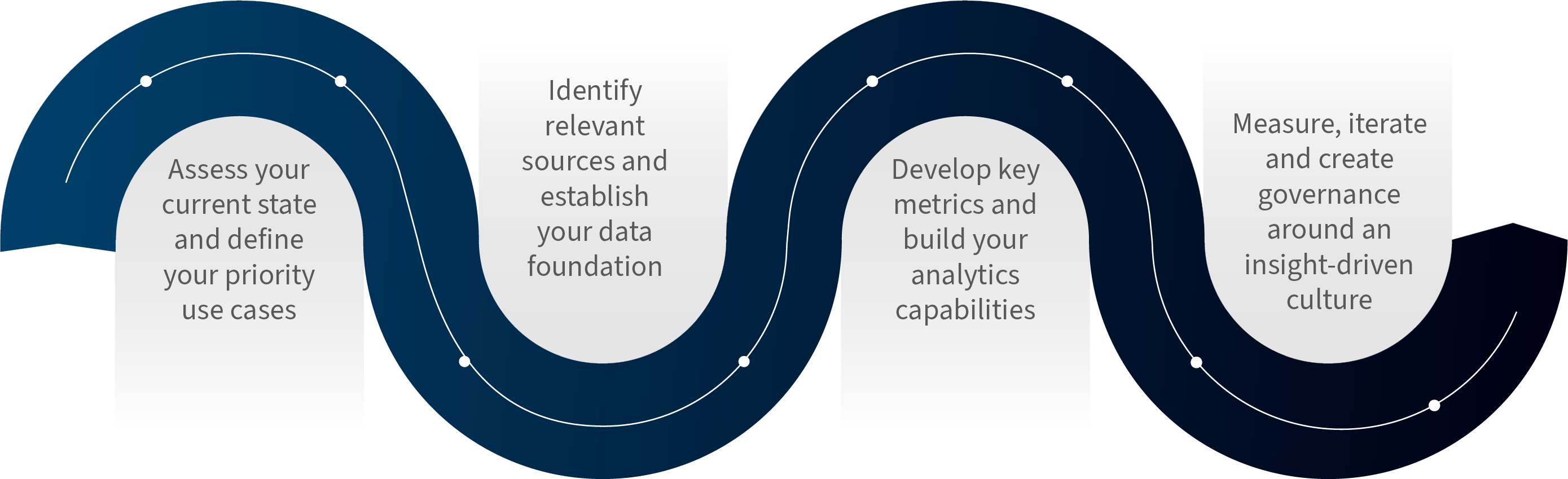
Moving up the maturity curve doesn’t have to be complicated, but it does have to be intentional and it requires a deliberate data strategy. Start by taking stock of your current capabilities: What data do you have access to, how clean and reliable is it, and what compliance questions are you most urgently trying to answer?
From there, prioritize your use cases based on risk impact and feasibility, and build a phased roadmap that sequences your investments in a logical, achievable way. The organizations that make the most progress follow a structured path – moving deliberately from assessment to execution while keeping their highest-priority risks squarely in focus. Quick and early wins help build credibility with leadership and create the momentum needed to tackle more complex capabilities down the road.
Think of your roadmap as a living document, not a one-time exercise. The regulatory landscape will shift, your organization’s risk profile will evolve, and your analytics capabilities will grow. The compliance leaders who stay ahead are the ones who revisit their strategy regularly, measure their progress honestly, and keep pushing the program forward – one meaningful step at a time.
Small Steps on the Journey to Add Value
The path to a mature data analytics program doesn’t require a massive budget or a team of data scientists – it requires intention. Start by identifying the one or two compliance risks with the greatest potential impact, then ask yourself: what data already exists in your organization that could signal those risks earlier? Most organizations are sitting on a gold mine of untapped information – transaction logs, expense records, vendor payment histories – and simply haven't connected the dots yet. That’s where the real opportunity lives.
The views expressed herein are those of the author(s) and not necessarily the views of FTI Consulting, Inc., its management, its subsidiaries, its affiliates, or its other professionals.
Related Insights
Related Information
Published
September 25, 2026
 Key Contacts
Senior Managing Director
Senior Managing Director
Managing Director