Drones: The Next Growth Adjacency for Telecom Operators
How Telecom Operators Can Expand Into The Growing Drone Market
-
July 28, 2026
Downloads Download Report
-

Telecom operators face a familiar but increasingly urgent challenge: growth. Connectivity remains essential to the digital economy, and data consumption continues to rise, yet sector revenues have remained broadly flat in many mature markets. Core mobile and fixed broadband services are increasingly commoditised, competition remains intense and the investment required to maintain and upgrade networks continues to rise.
As operators explore adjacent growth opportunities, unmanned aerial systems, commonly known as drones, deserve close attention not only because of the growth the ecosystem is experiencing, but also because they sit unusually close to several assets that telecom operators already own, operate or understand.
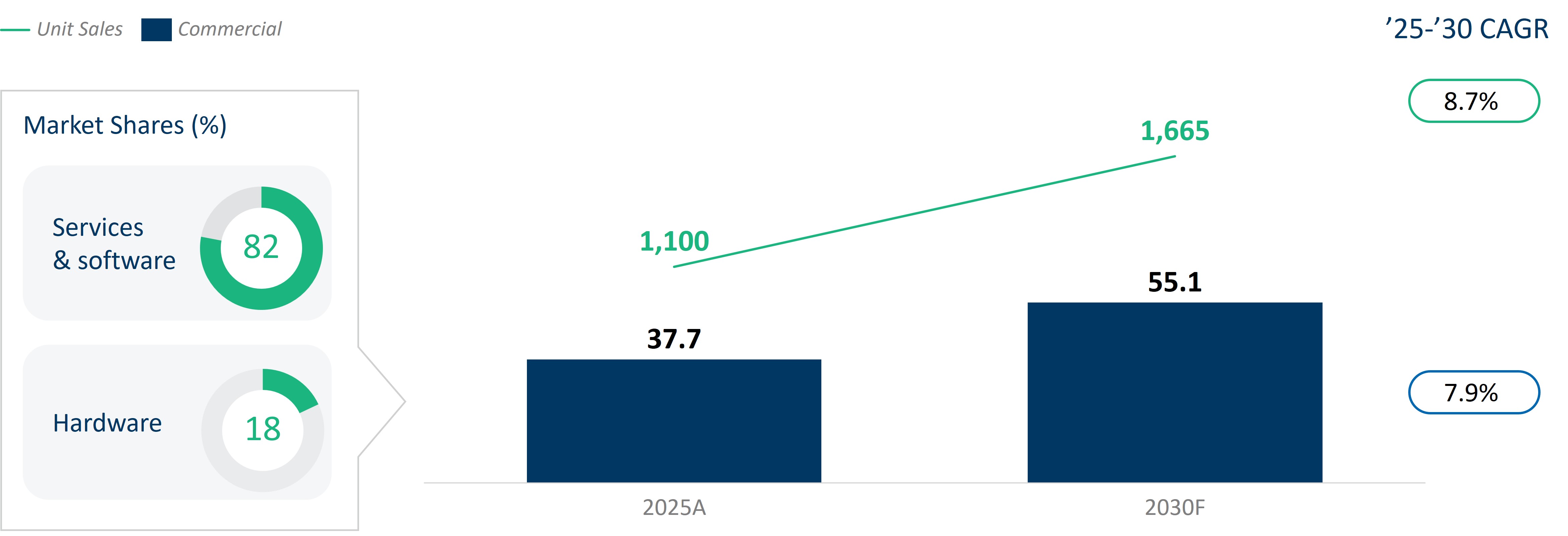
The drone market is entering a phase of sustained growth. Analysts indicate that the market for commercial drones reached $38 billion in 2025 and it is expected to reach in excess of $55 billion by 20301 — a compound annual growth rate of close to 8%. Defence applications are already proving the strategic relevance of drones on the battlefield, while civilian adoption is expanding across multiple verticals.
Four structural forces are converging to accelerate the sector’s commercial maturity. First, advances in AI, computer vision and sensor fusion are expanding what drones can detect, decide and do with less human intervention. Second, regulation is gradually evolving, particularly around Beyond Visual Line of Sight (“BVLOS”) operations, even if approvals remain complex and uneven across markets. Third, drone hardware is becoming cheaper and more capable, shifting differentiation towards software, data, operations and mission assurance. Fourth, defence programmes are accelerating innovation and industrial capacity, with part of that momentum likely to spill over into civilian and dual-use markets.
For telecom operators, this creates an opportunity to build a differentiated position before the market fully settles. Unlike other adjacent areas, drones sit close to the telecom core. Scaled drone operations will require reliable connectivity, coverage assurance, secure data transmission, distributed infrastructure, real-time network intelligence and trusted engagement with regulators. These are areas where telecom operators already have assets and capabilities that few other players can easily replicate.
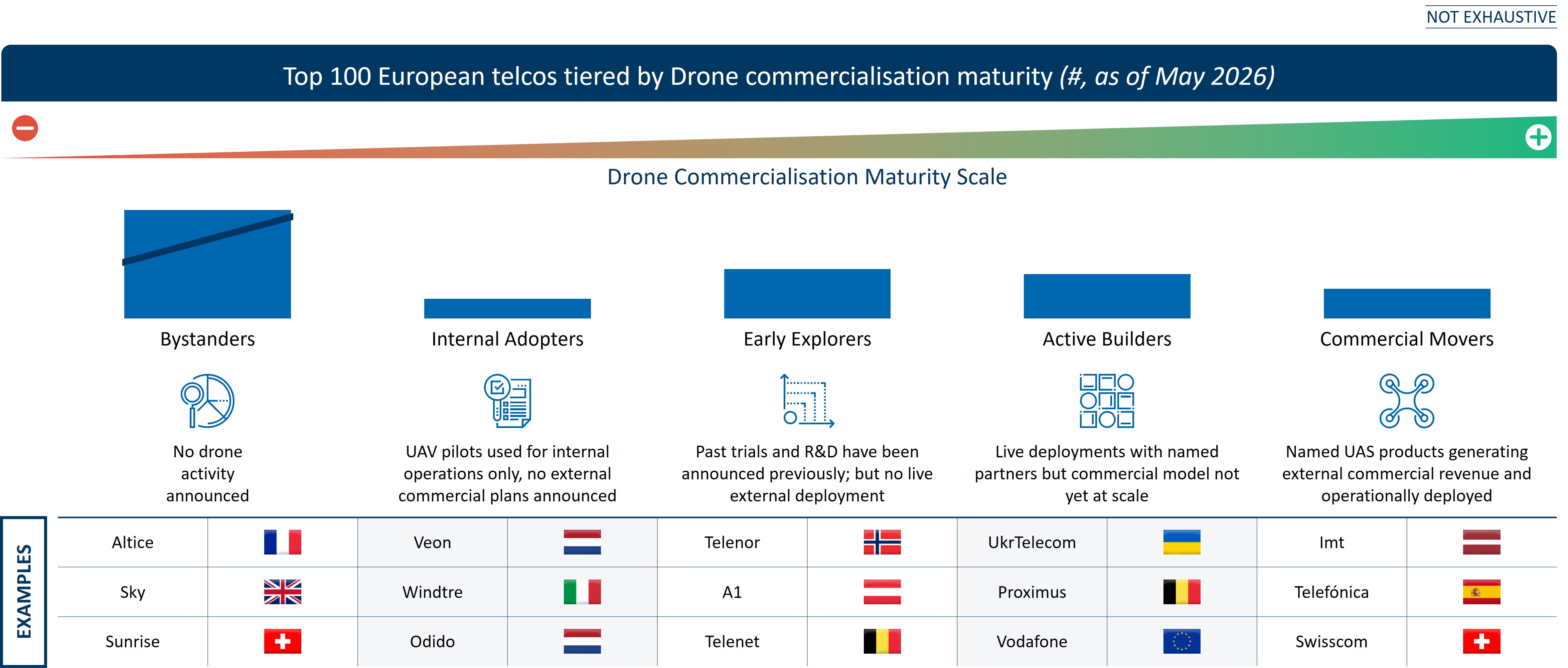
Telcos are beginning to respond, but the market is still largely untapped. Our benchmark of the top 100 European telcos shows that more than 70% remain bystanders or purely internal adopters.2 This leaves room for early movers to build a stronger position before the ecosystem matures. The operators that move beyond pilots and isolated use cases, make clear choices on where to play, how to partner and which customer problems to solve will be better placed to monetise the opportunity at scale. What are the structural drivers of the commercial drone market growth, the areas of the drone ecosystem where telcos have a credible role, the strategic archetypes available to them and the key choices required to build a viable market entry strategy?
The Commercial Drone Era Arrives
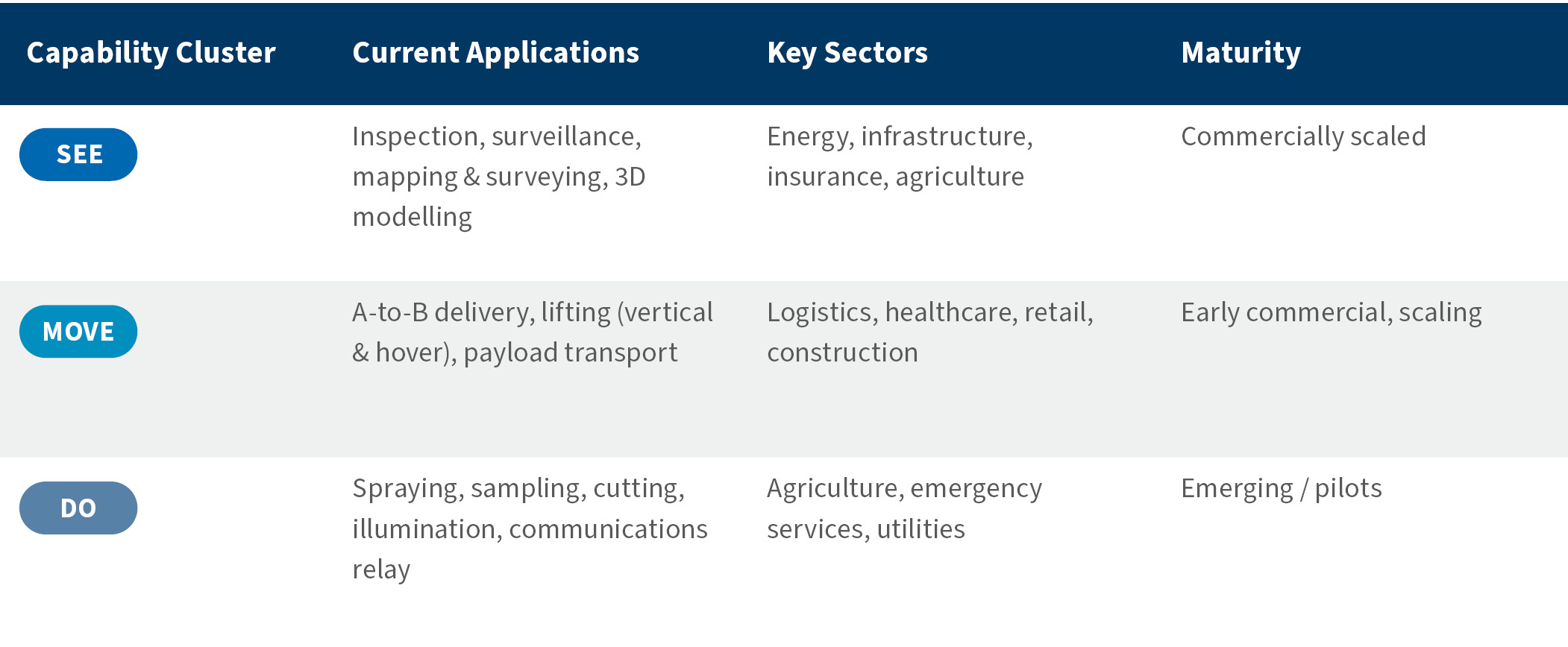
The drone industry is now entering a qualitatively different era, characterised by regulatory maturity, AI-enhanced autonomy and multi-industry commercial deployments at scale.
Several structural drivers are compressing the timeline needed for mass commercial adoption:
Figure 1 – Current UAS Capability Spectrum & Inflection Drivers
Source: FTI Consulting Analysis
- AI is improving the economics of drone: Advances in computer vision, obstacle detection, route optimisation and real-time decision support are reducing the level of human intervention required for routine missions. Combined with reliable command-and-control connectivity, this can make larger drone fleets more practical and more affordable to operate.
- BVLOS regulation is the most important near-term enabler of commercial scale: Operations beyond visual line of sight are essential for drones to move beyond small-scale and manually intensive use cases. They enable automated inspection corridors, long-range infrastructure monitoring, emergency response, logistics and eventually, more complex urban air mobility applications. European regulators have continued to advance U-space and BVLOS-related frameworks, but implementation remains dependent on national authorities, with many BVLOS operations still requiring operational authorisation and close engagement with the relevant aviation regulator.3
- Hardware commoditisation: Hardware cost decline continues to expand the addressable market. The cost of drone platforms and components has fallen while performance has improved, making adoption more attractive for enterprise customers and public-sector bodies that previously struggled to justify procurement. Hardware remains highly differentiated in specialist and mission-critical applications, but the broader market is increasingly shifting value towards software, data, operations, connectivity and mission assurance.
- Defence is accelerating the wider drone: Conflicts in Eastern Europe and the Middle East have increased government investment in drone R&D, manufacturing capacity, autonomy, sensing, communications and counter-drone capabilities. Not all of this will translate directly into commercial markets, but the pace of innovation, industrial investment and supply-chain development is increasing.
As value shifts from hardware towards software and services, the drone opportunity becomes more relevant for players able to provide managed connectivity, secure data transmission, fleet intelligence, edge processing and operational reliability. Telcos do not need to manufacture drones to participate. Their opportunity sits in the enabling layers that allow drone services to operate safely, securely and at scale.
Figure 2 – Global Commercial Drone Market Size & Unit Sales
USD Bn, ‘000s of units, 2025 & 2030
Notes: (1) Inspection in the context of damage assessment and/or maintenance, (2) Surveillance in context of continuous/semi-continuous object detection, (3) Mapping/ Surveying in the context of one-off imagery cases, or building 3D maps of extended areas, (4) Beyond Visual Line of Sight, (5) Calculate based on Total Avg. Unit Sales by Industry
Source: FTI Consulting analysis using Drone Industry Insights Market Report 2025-2030, Drone Industry Insights Global Review 20254
Why Adjacencies Are Now Structural for Telcos
European telecom operators have faced the same fundamental challenge for over a decade: connectivity revenue growth is structurally constrained as mobile and broadband services continue to be commoditised. Average Revenue Per User (“ARPU”) has been under sustained pressure, capital intensity remains high and investor expectations for growth have forced operators to reassess where their assets and capabilities can drive a new wave of value creation.
In response, the industry has systematically explored adjacent markets, where to leverage existing assets, customer relationships and trust. Some adjacencies, such as cloud services and cybersecurity in the B2B segment, have generated meaningful revenue and strategic differentiation. Others, such as smart home or consumer financial services, have produced mixed results, in part because telcos lacked sustainable competitive differentiation against native digital competitors.
Figure 3 – Telco Adjacencies
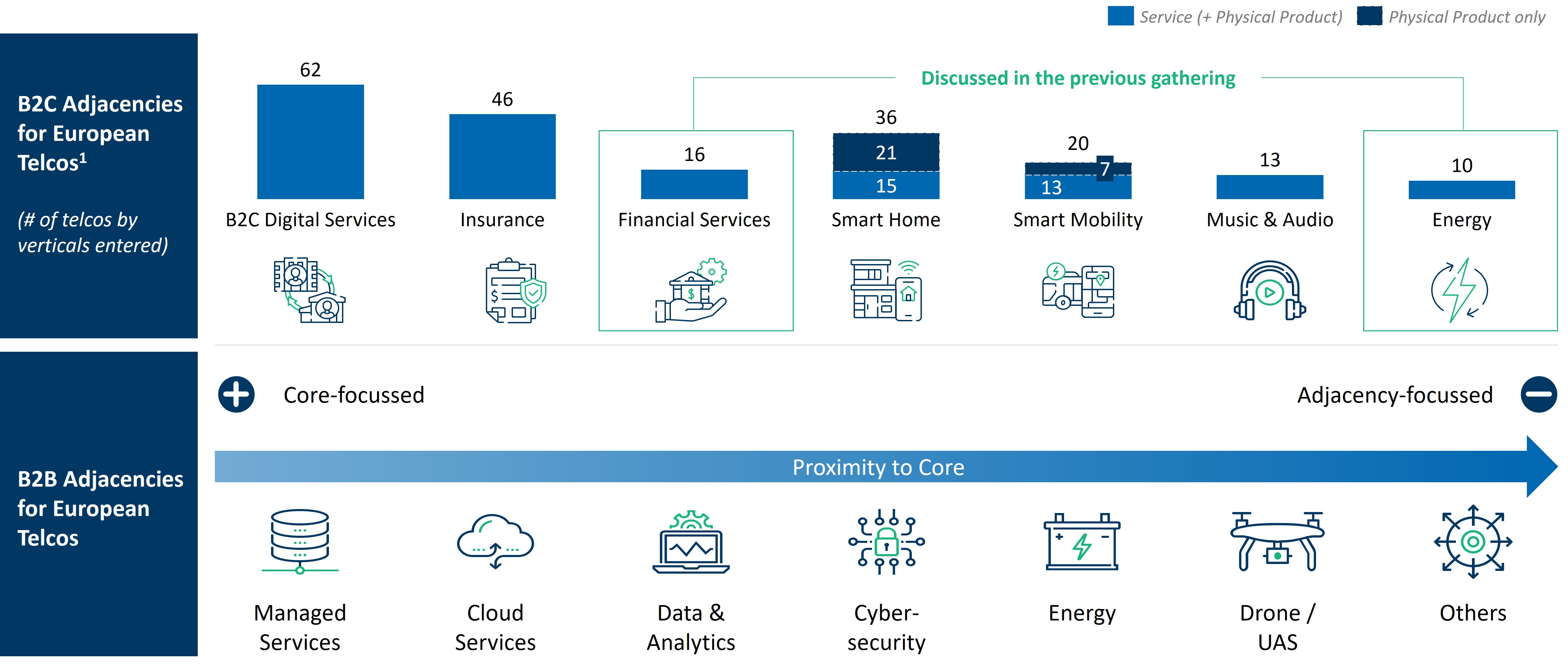
Notes: (1) Includes MVNOs only; Source: FTI Consulting benchmarks across c.100 European Telcos using publicly available information and company websites
The drone opportunity is fundamentally different from previous adjacency moves. In other adjacent markets, telcos often had to compete on dimensions where native digital players were structurally stronger, including product experience, digital engagement or consumer proposition design and brand appeal. Drones are different. Scaled unmanned aircraft system (“UAS”) operations depend on certified, reliable and low-latency connectivity, licensed spectrum, real-time network data, regulatory engagement and national infrastructure trust. These are assets that telecom operators already possess and that drone-native players cannot easily replicate. This gives telcos a genuine and defensible right to play in the drone ecosystem.
Where Telcos Belong in the UAS Ecosystem
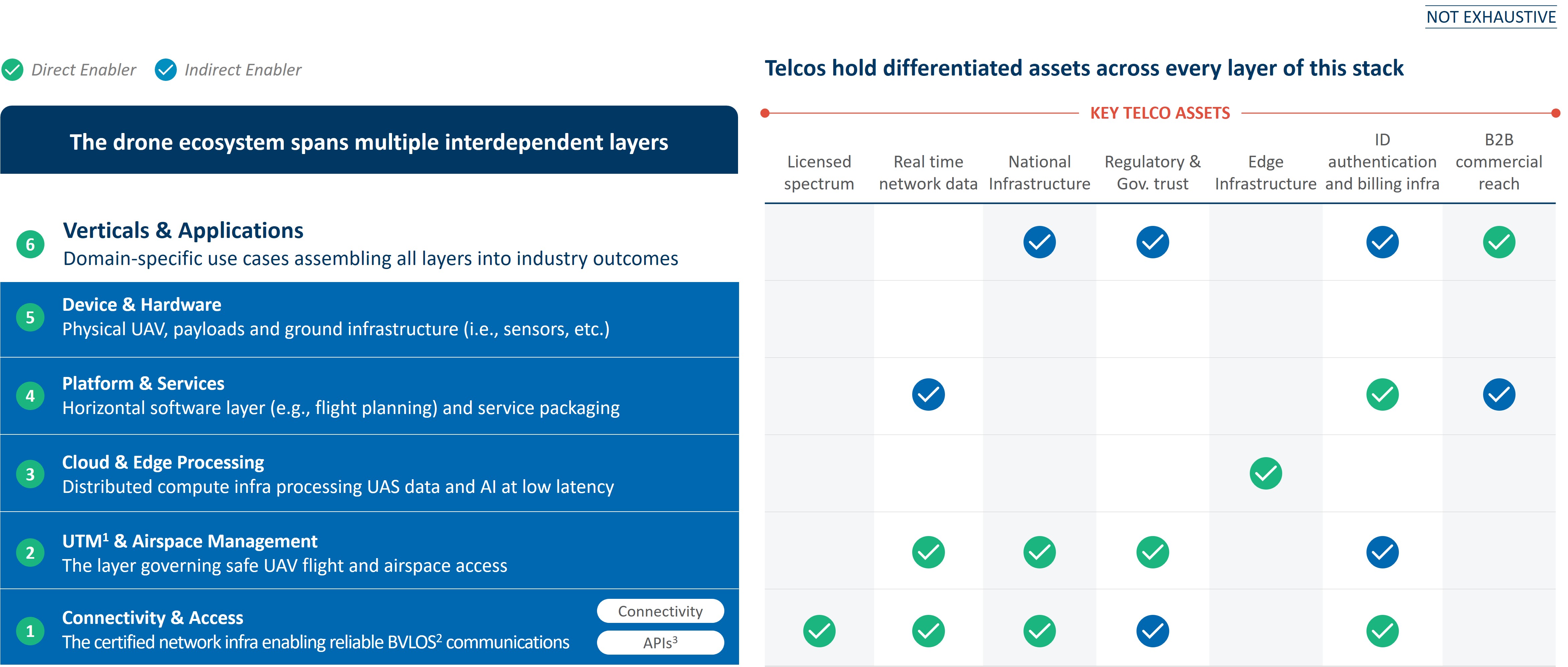
The drone value spans several interdependent layers, from connectivity and airspace management to hardware, software platforms and vertical-specific applications. Telcos hold differentiated assets and capabilities relevant across the entire stack, enabling varying degrees of participation across each layer, from foundational enablement to full-service orchestration.
Figure 4 – Relevant Telco Assets and Capabilities Across the Drone Stack
Notes: (1) Unmanned Traffic Management, (2) Beyond Visual Line of Sight, (3) Application Programming Interfaces
Source: FTI Consulting analysis using GSMA Intelligence, Total Telecom, Connect Europe
The most immediate role is in connectivity and access. Scaled drone operations, especially BVLOS missions, require reliable communications, coverage assurance, secure data transmission and network resilience. Telcos are among the few players with licensed spectrum, national infrastructure, operational network expertise and the ability to provide connectivity at scale.
A second area is Unmanned aircraft systems Traffic Management (“UTM”) and airspace management. Telcos are not natural aviation authorities, but they can become important partners in the systems that support safe drone operations. Real-time network data, infrastructure coverage, identity capabilities and trusted relationships with public authorities can make them relevant contributors to national or sector-specific UAS traffic management platforms.
Cloud and edge processing also create an important role. As drone fleets generate larger volumes of video, sensor and telemetry data, customers will need secure processing, storage and analytics closer to the point of operation. Telco edge infrastructure, where available, can support low-latency processing and mission-critical applications, particularly in industrial, public safety and critical infrastructure use cases.
Beyond infrastructure, telcos also bring platform and commercial assets and capabilities that are often underestimated. Identity management, APIs, billing capabilities, enterprise account relationships and managed service experience can reduce the friction of deploying drone services to corporate and public-sector customers. These three arguments do not make telcos natural owners of the full drone stack, but it gives them a credible role in enabling, orchestrating and commercialising drone services at scale.
The Competitive Landscape: A Window Still Open for Telcos
Despite the structural opportunity, the commercial drone market remains at an early stage among European telecom operators. FTI Consulting’s benchmark of the top 100 European telcos by drone commercialisation maturity shows a market still heavily skewed towards inaction, with the majority of operators having taken no external-facing steps to participate in the drone economy.5
Among the smaller cohort of commercial movers, a range of approaches are starting to emerge. BT offers drone SIM connectivity services.6 Telefónica has deployed T_Space, a drone platform combining connectivity with airspace management capabilities.7 Orange has launched Drone Guardian, focused on drone detection and security. Several Nordic operators are building BVLOS connectivity corridors in partnership with aviation authorities and ecosystem partners.8
Figure 5 – Drone Adoption Benchmark Amongst Telcos (May 2026)
Source: FTI Consulting analysis using Telecom operators’ Company Websites, Dronewatch Europe
These early movers are beginning to build assets that matter: ecosystems of partners, certification credentials, technical know-how and customer references. None of these might create an automatic long-term right to win, but they are difficult to build overnight. As the market matures, late entrants may find that the most attractive partnerships, customers and regulatory positions and reference customers have already been taken. This creates a clear window for telecom operators. Those that establish BVLOS connectivity capabilities, UTM partnerships and credible enterprise use cases in the near term will be better placed to become preferred infrastructure and service partners as the market scales. In drone connectivity, as in other infrastructure-led markets, speed matters. The advantage will come less from being first to announce a pilot and more from being early to build the capabilities, partnerships and customer proof points required to monetise the opportunity at scale.
Three Strategic Archetypes
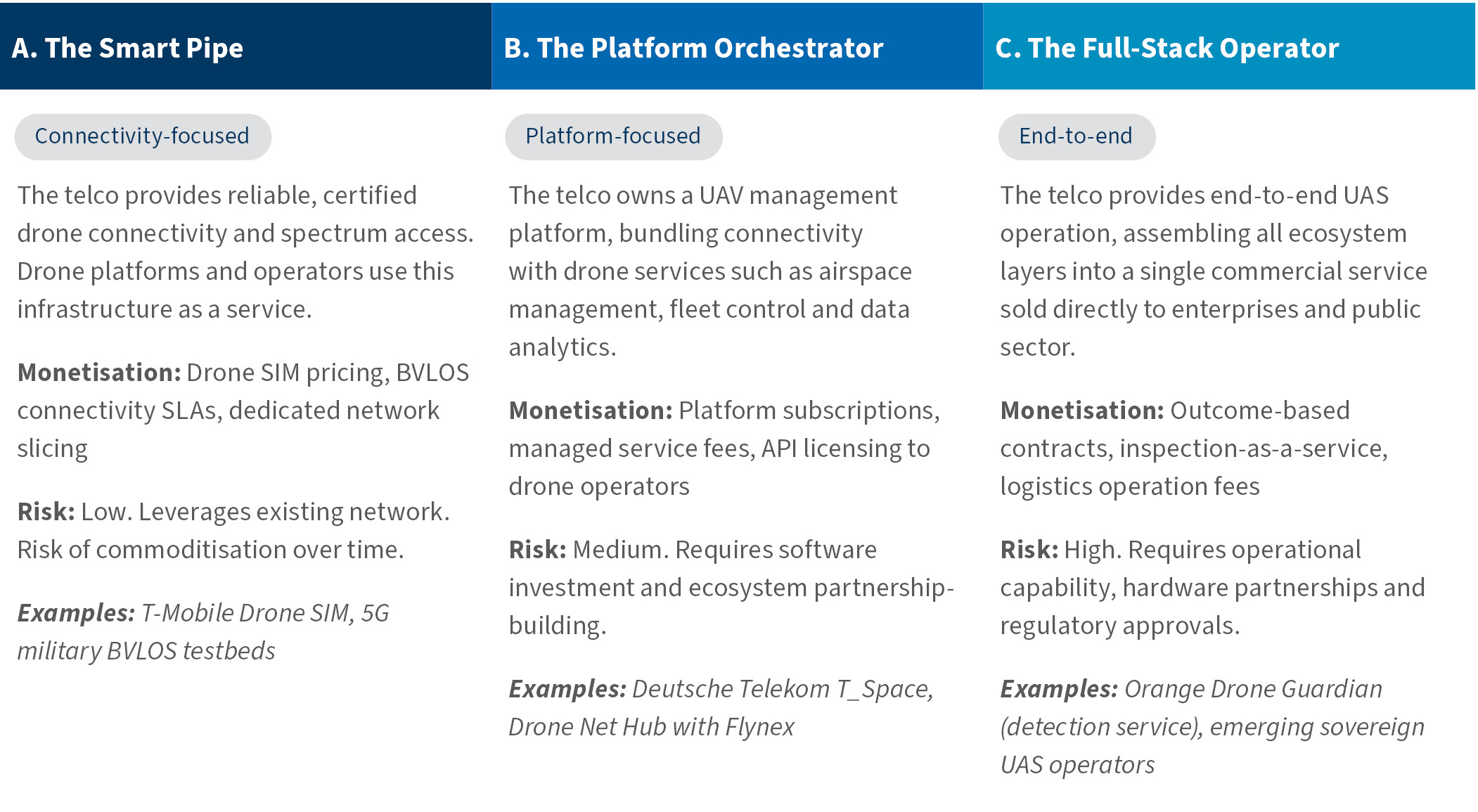
Telecom operators entering the drone market face a fundamental positioning question: How far into the value chain should they integrate? Emerging operator strategies point to three broad archetypes, each with different levels of ambition, investment, monetisation potential and execution risk. The right choice will depend on the operator’s existing assets, B2B capabilities, regulatory position, partner ecosystem and appetite for operational complexity.
Figure 6 – Strategic Archetypes for Telcos
Source: FTI Consulting analysis, Not exhaustive
The smart pipe: Most telcos will start here, providing certified drone connectivity as an extension of their existing network services. This is the most natural entry point, as it builds on existing licensed spectrum, national coverage, existing organisation and network operations model and established commercial models. Monetisation can come through drone SIMs, BVLOS connectivity SLAs, private networks or dedicated network slicing. The risk is that, over time, connectivity alone may become commoditised unless it is linked to stronger service-level guarantees, data services or ecosystem partnerships.
The platform orchestrator: Under this archetype, telcos move beyond connectivity into the platform layer. They bundle connectivity with services such as airspace management, fleet control, mission planning, data analytics, APIs and billing. The commercial model can include platform subscriptions, managed service fees or API-based revenues. This position offers stronger differentiation than pure connectivity, but requires investment, partner integration and a more sophisticated go-to-market model.
The Full-stack Operator: This is the most ambitious archetype. The telco provides an end-to-end drone service, assembling the required ecosystem layers into a single proposition sold directly to enterprise and public-sector customers. Monetisation can include outcome-based contracts, inspection-as-a-service, monitoring services or logistics operation fees. The model offers higher revenue potential and deeper customer relationships, but also carries greater execution risk, requiring operational capabilities, hardware partnerships, regulatory approvals and sector-specific expertise.
These archetypes should not be seen as fixed end-states. For many operators, the most realistic path will be progressive: Start with connectivity, build platform capabilities through partnerships or acquisition and selectively move into full-stack services where the customer need, regulatory environment and economics justify the additional complexity.
Building a Credible Market Entry
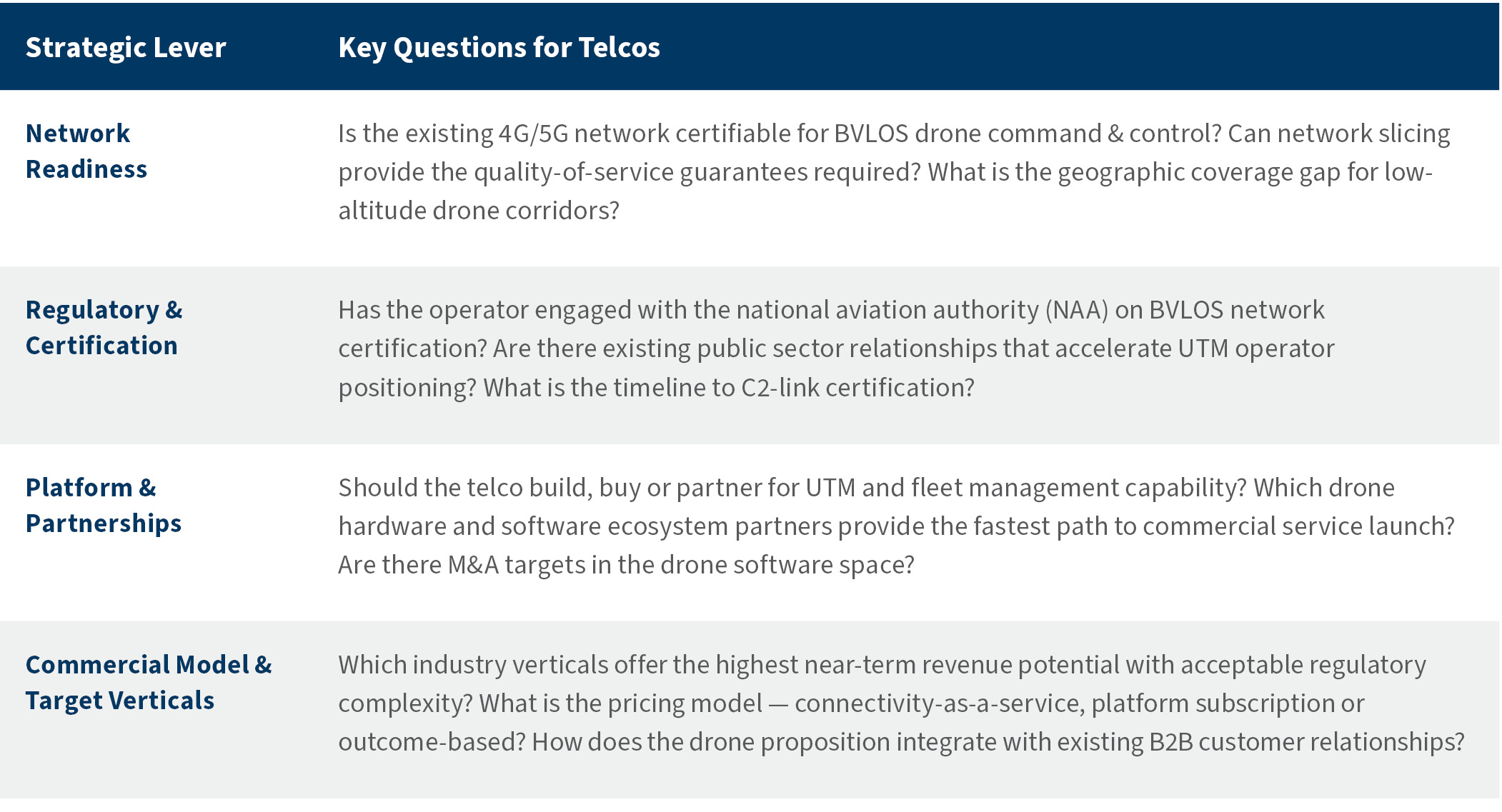
For telcos assessing drone market entry, credibility will depend on four strategic levers: network readiness, regulatory and certification engagement, platform and partnership choices and the commercial model. Ambition alone will not be enough. Enterprise customers and public authorities will need evidence that the operator can support safe, reliable and scalable drone operations.
Figure 7 – Delivery considerations : Key questions
Source: FTI Consulting analysis
Network readiness is the first test. Drone connectivity should be seen as an extension of existing mobile networks into low-altitude airspace. Traditional 4G and 5G networks were designed primarily for people, vehicles and connected devices on the ground. Scaled drone operations, particularly BVLOS missions, require operators to understand how those same networks perform above ground level, across flight corridors, industrial sites, rural areas and critical infrastructure routes. This means assessing aerial coverage, command-and-control reliability, handover performance, latency, resilience and the potential roles of network slicing, private networks or dedicated connectivity models.
Regulatory engagement is equally time critical. BVLOS certification processes are lengthy and involve national aviation authorities that are still building experience with drone operations at scale. Telcos that start this dialogue early, even before full commercial readiness, will be better positioned to understand certification pathways, shape technical requirements and build trust with public-sector stakeholders.
The platform and partnership model will determine how far the operator can move beyond connectivity. Few telcos will build the full UAS stack alone. They will need to decide where to build, buy or partner across UTM, fleet management, hardware, analytics, mission planning and vertical applications.
On the commercial side, the strongest near-term opportunities are likely to sit in verticals with clear operational pain points, recurring demand and manageable regulatory complexity. Energy infrastructure inspection, critical infrastructure monitoring, public safety and selected agricultural use cases are natural starting points. These segments allow telcos to build customer references and operational credibility before moving into more complex domains such as urban air mobility or large-scale delivery.
Conclusion — The Strategic Imperative for Telcos
The drone market is becoming a present-day commercial opportunity, supported by structural demand drivers, regulatory progress and a growing need for trusted infrastructure partners. It is also starting to be shaped by the industry’s early movers.
For telcos still assessing the opportunity, the case is becoming clearer. Many of the required assets are already in place: licensed spectrum, national network infrastructure, enterprise relationships, regulatory experience and the ability to provide secure and reliable connectivity. The market is entering a more commercial phase and the competition for the most attractive positions is beginning to intensify. Connectivity revenues will not recover historic growth through optimisation alone. Drones offer a rare adjacency where telcos’ structural assets can create differentiation, provided they secure a relevant position in the layers where connectivity, trust, data and infrastructure matter most.
For operators and investors, value creation in the drone ecosystem will depend less on the headline size of the drone market and more on execution: network readiness, regulatory positioning, partner selection and the ability to align connectivity and platform capabilities with specific customer use cases. Those that move early will have a stronger chance to shape their role in the emerging airspace economy. Those that wait may find that the most attractive positions have already been taken.
Footnotes:
1: FTI Consulting analysis using “Drone Market Size, Forecast 2025-2030, Market Developments & Regulations” by Drone Industry Insights
2: FTI Consulting proprietary benchmarking analysis, last updated on May 2026
3: FTI Consulting proprietary benchmarking analysis using European Union Aviation Safety Agency (EASA) data.
4: Drone Industry Insights, “Drone Industry Insights”, Drone Industry Insights.
5: FTI Consulting proprietary benchmarking analysis, last updated May 2026.
6: BT, “Drone SIM”, BT Business.
7: T Telefónica, “Telefónica lanza T-Space, servicio comercial pionero de drones pilotados en remoto”, Telefónica (10 April 2026).
8: Dimetor, “Telia and AirborneRF Are Unlocking the Next Generation of Aerial Digitisation in the Nordic and Baltic Countries”, Dimetor (24 February 2023).
The benchmark is based on a market scan of telecom operators globally, identifying publicly available evidence of drone activity, including service offerings, trials, partnerships and corporate communications about testing, using or launching drone services. Each operator is classified according to the nature and stage of that activity, allowing us to compare maturity across the market. The scan covers external-facing signals only and does not capture internal or unannounced initiatives. Figures reflect activity identified as of June 2026.
The views expressed herein are those of the author(s) and not necessarily the views of FTI Consulting, Inc., its management, its subsidiaries, its affiliates, or its other professionals.
Related Insights
Published
July 28, 2026
 Key Contacts